




Low carb snacks – the best and the worst
 , medical review by Dr. Bret Scher, MD
 Evidence based
What low carb snacks are good? There’s a simple rule: The best low carb snack is no snack.1
That’s right. Snacks are usually not needed on low carb, as hunger should be reduced when doing it right.2 If you’re still hungry, you may want to add more protein, fibrous low carb veggies, or a little more healthy fat or to your meals.
That said, we know that everyone wants a snack once in a while. So here are some great options and a few common mistakes to avoid.
Key takeaways
No prep required: Nuts and cheese are great low carb snacks, but easy to overdo. Enjoy them, but watch portion sizes.See all easy options.
Are you a choco-holic? No worries. Although chocolate is not low carb, you don’t have to live without it on a low carb diet.
What’s the secret?
Snacking eggcellence: View our recipes for eggs and other tasty homemade snacks!
21 low carb solutions.
No preparation needed
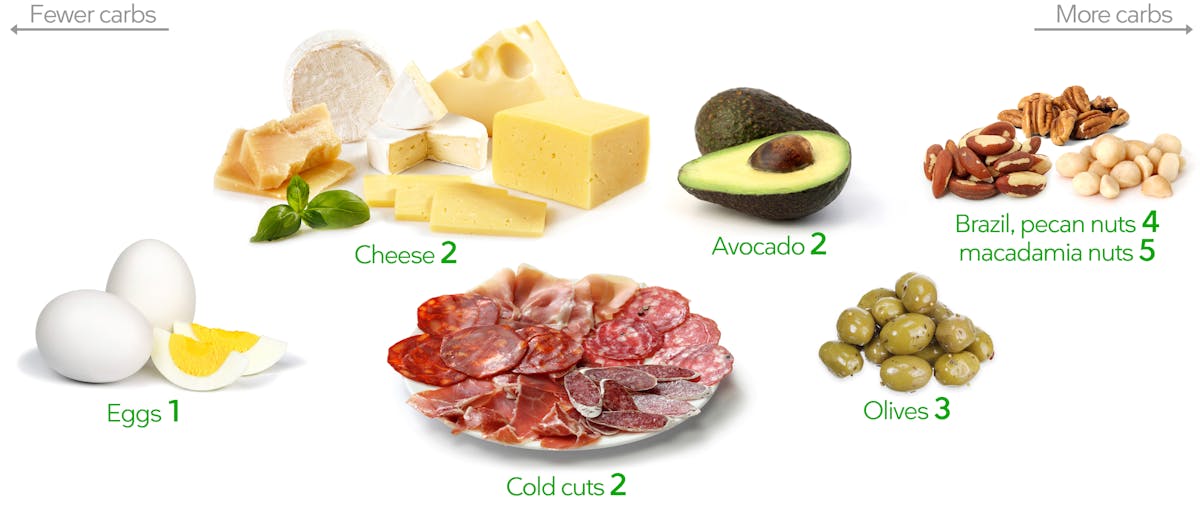
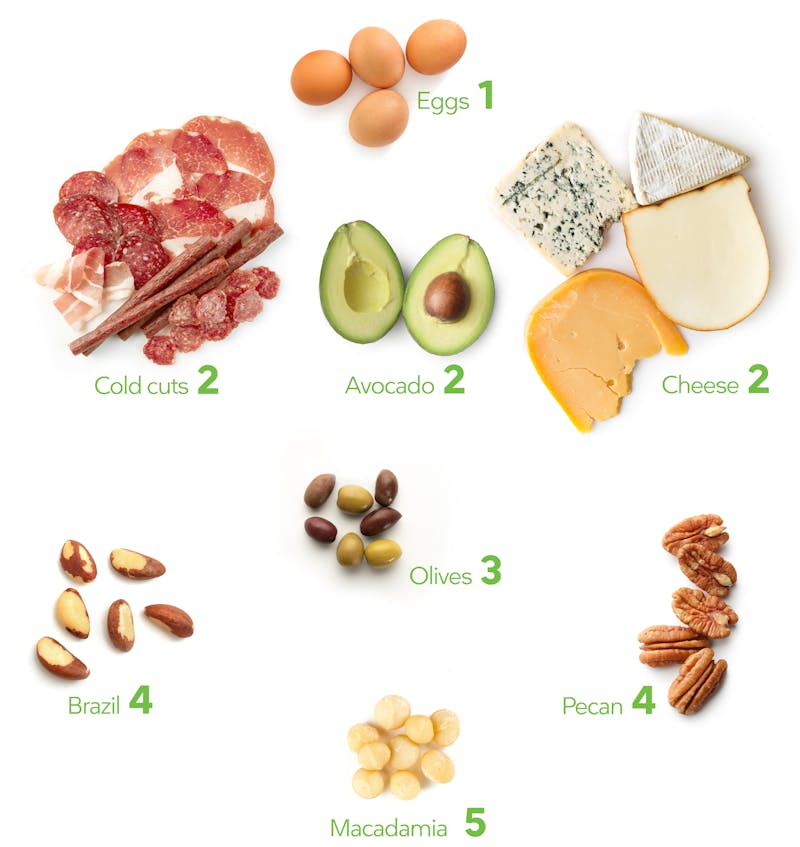
The numbers are net carbs (total carbs minus fiber carbs) in 100 grams (3.5 ounces.)3 That means that 100 grams of cheese contains 2 grams of net carbs.
Eggs are a great low carb option.4 Keep a few hard-boiled eggs ready for when you need a perfect snack. Feel free to add mayonnaise.
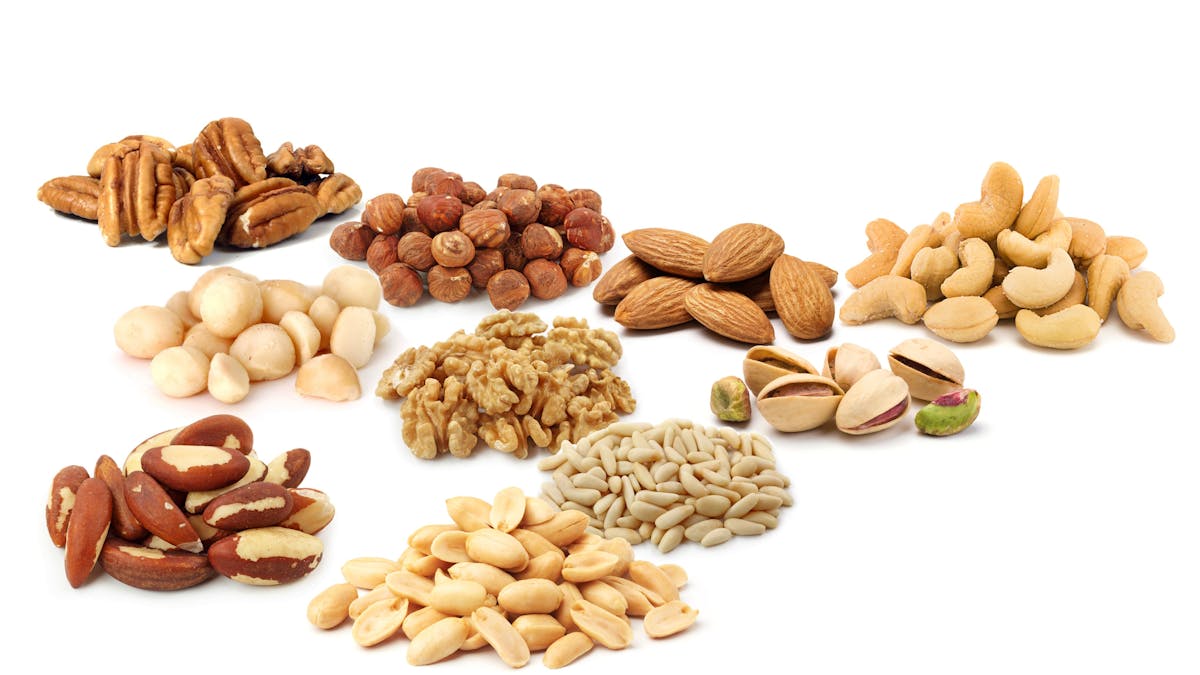
Nuts are a low carb snack favorite. But be careful as the carbs quickly add up, especially if you eat cashews. Choose lower-carb macadamia, Brazil or pecan nuts instead. Low carb nuts guide
Here is a short summary of the guide where we share the best and worst snacks to eat on a low carb diet.
Snack recipes
Are you ready to do some preparations for an awesome low carb snack? Check out our fantastic low carb snack recipes, like these top choices:
Top 6





Vegetable sticks and dip
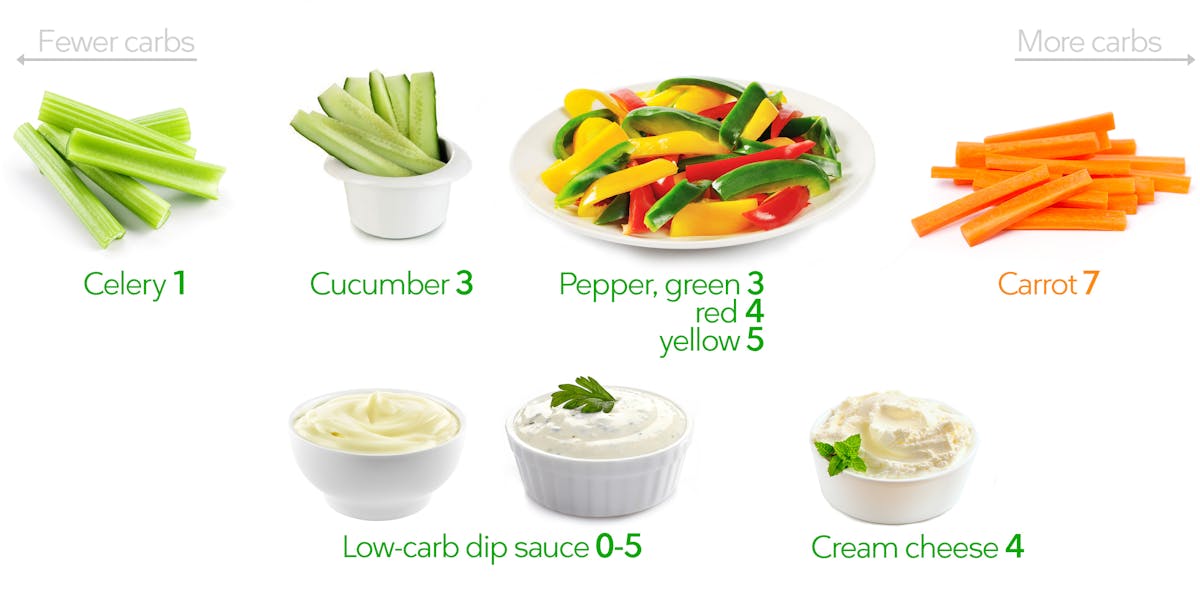
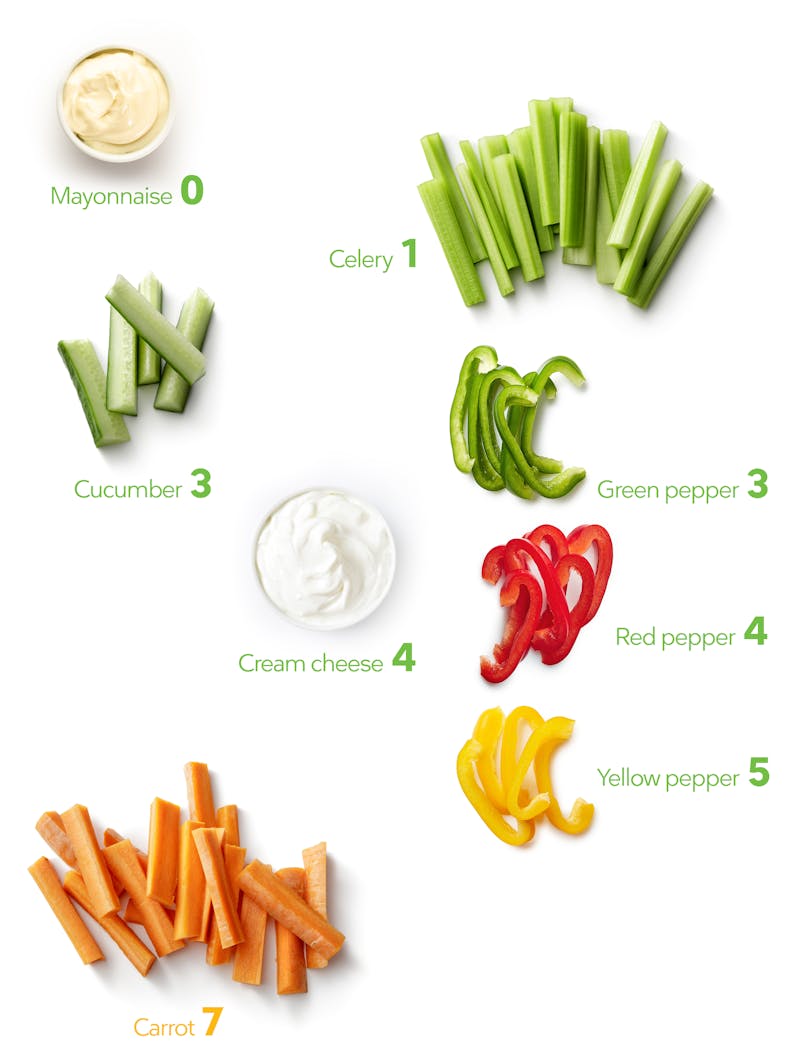
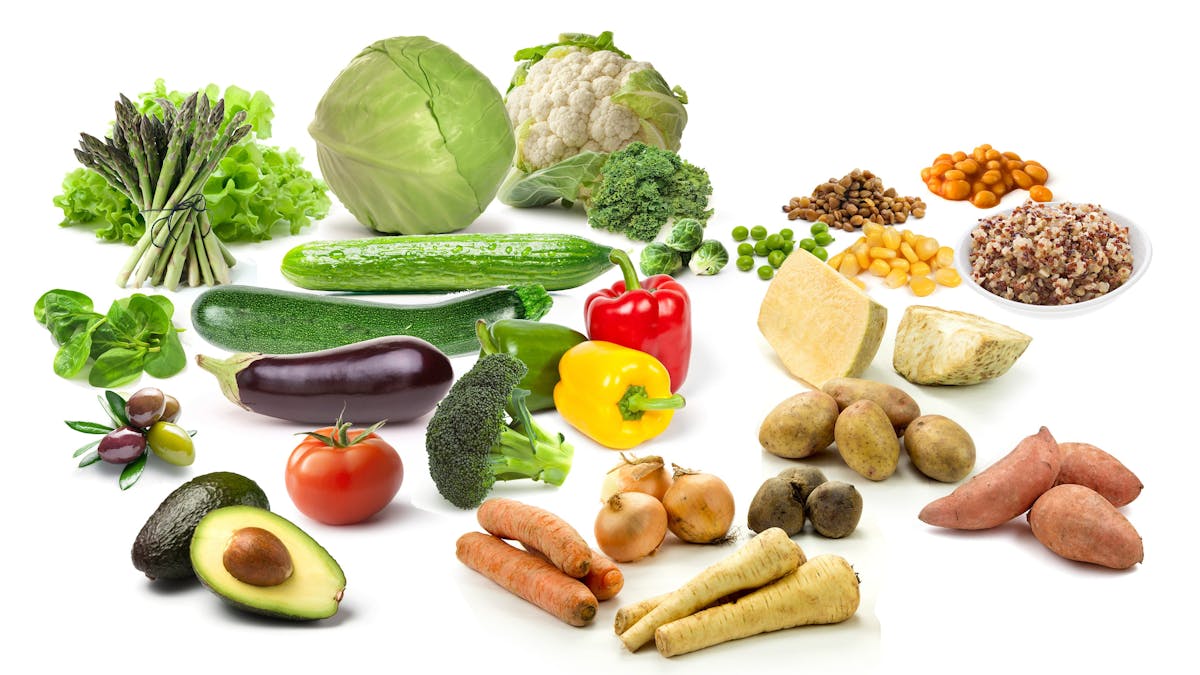
Vegetable sticks are relatively low carb, except for carrots, which are slightly higher. Low carb vegetables guide
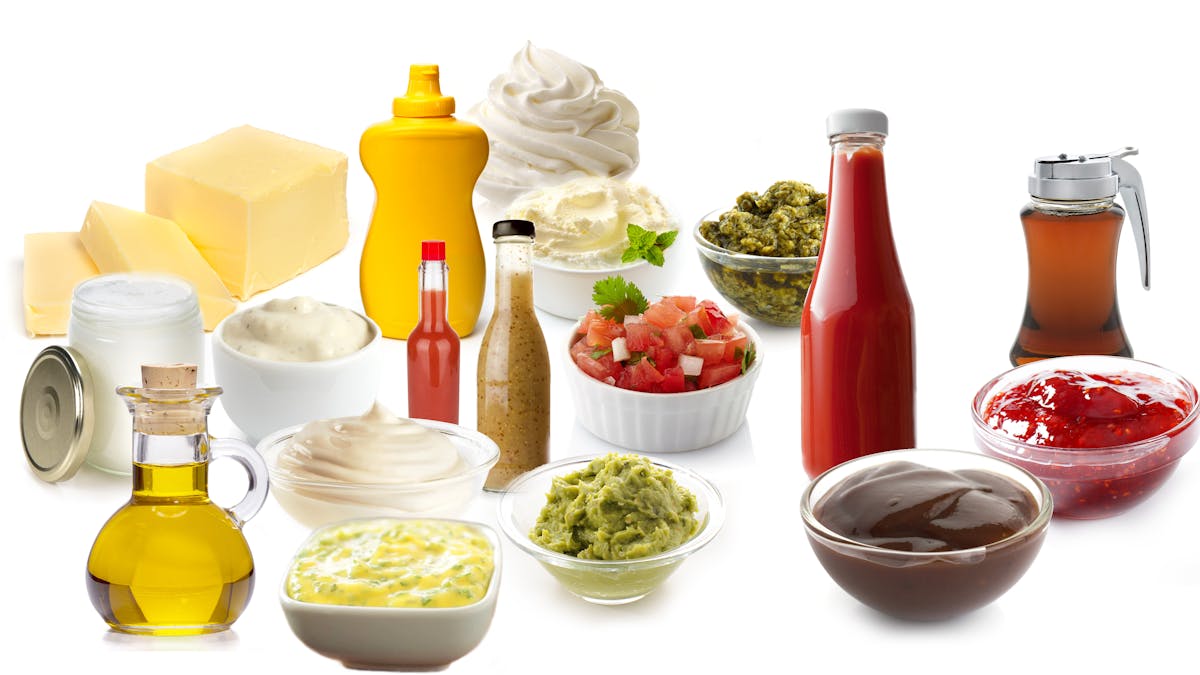
Dip: Add cream cheese or any low carb and high-fat dip sauce.5 Just make sure not to go overboard as the calories can add up quickly.
Here are our top recipes:
Top 6


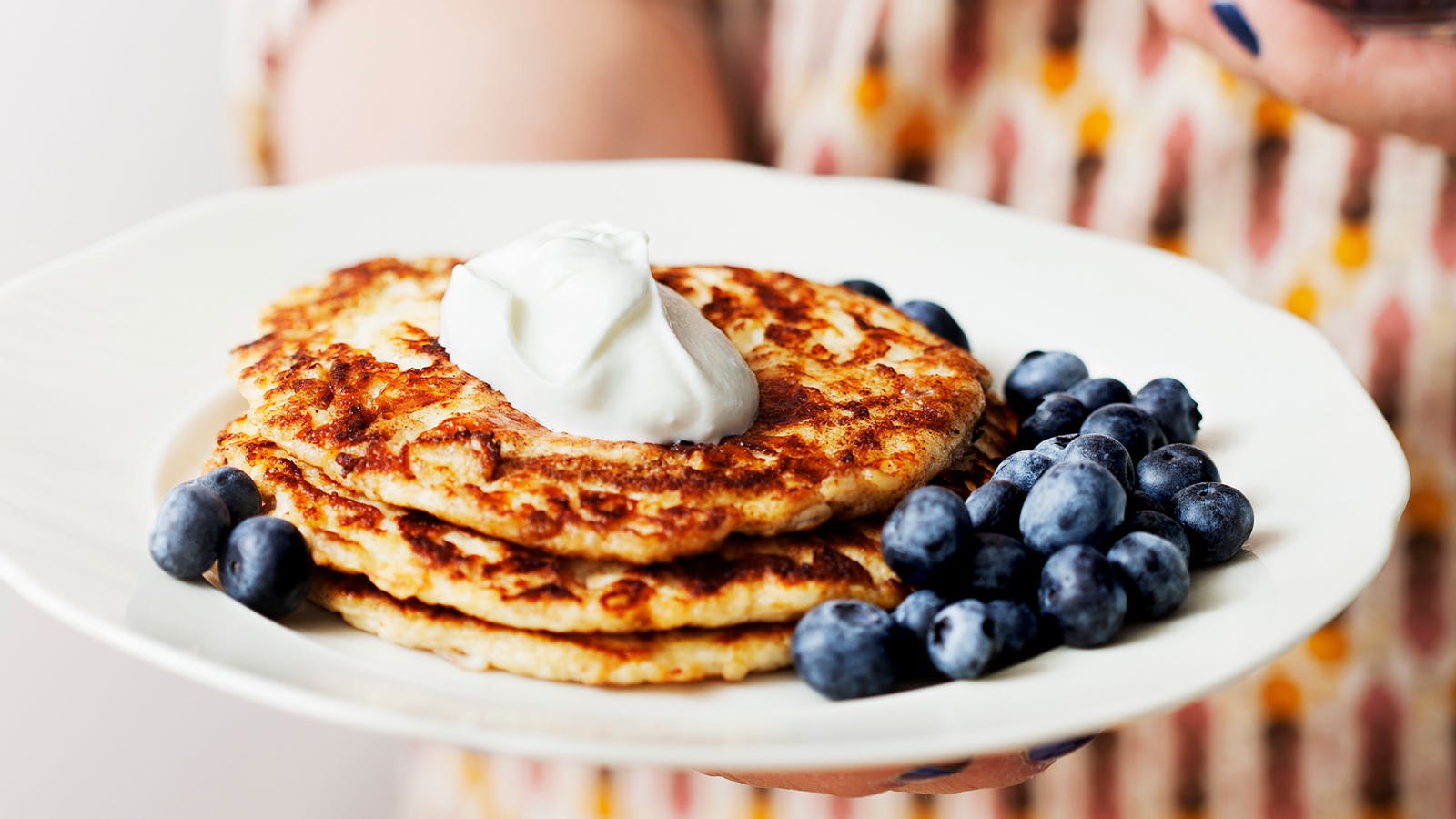
Berries and cream
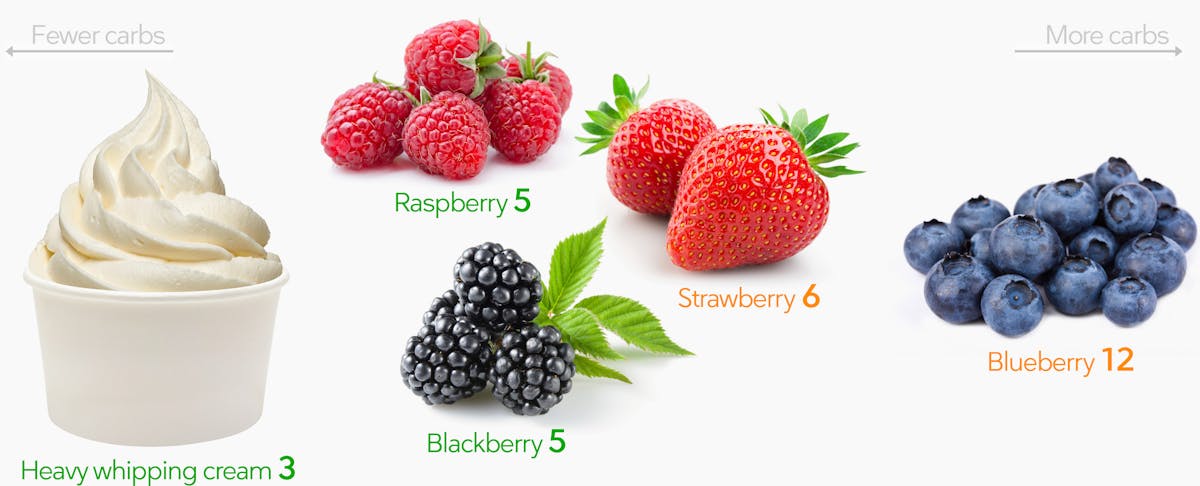
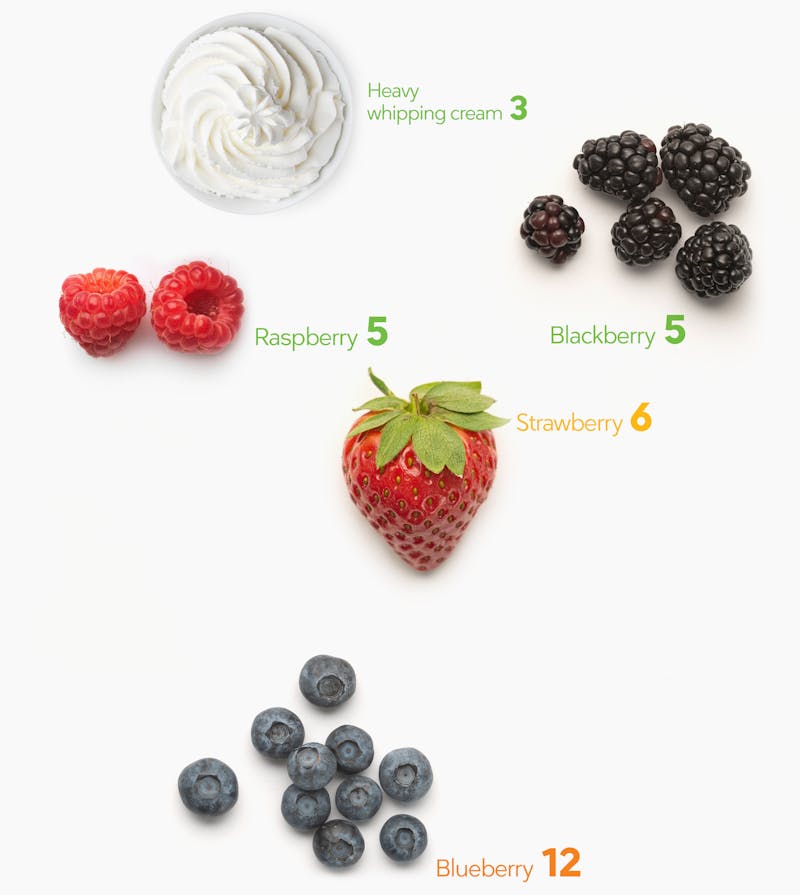
Heavy whipping cream – forget low-fat fake cream. Get real heavy whipping cream, ideally at 40 percent fat and definitely unsweetened (the natural sweetness is quite enough once you get used to it). Whip and have it with your berries. Note that this is absolutely delicious and easy to over-consume, which may slow down weight loss. So try to not overdo it.
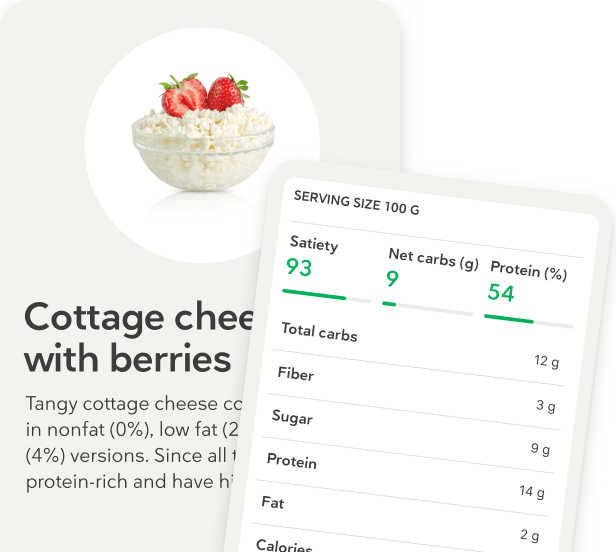
Cottage cheese- If you’re looking for a higher protein snack, consider adding cottage cheese to your berries for a delicious and higher satiety approach.
Recipes


Chocolate
Digestible carbs per 100 grams (3½ ounces)
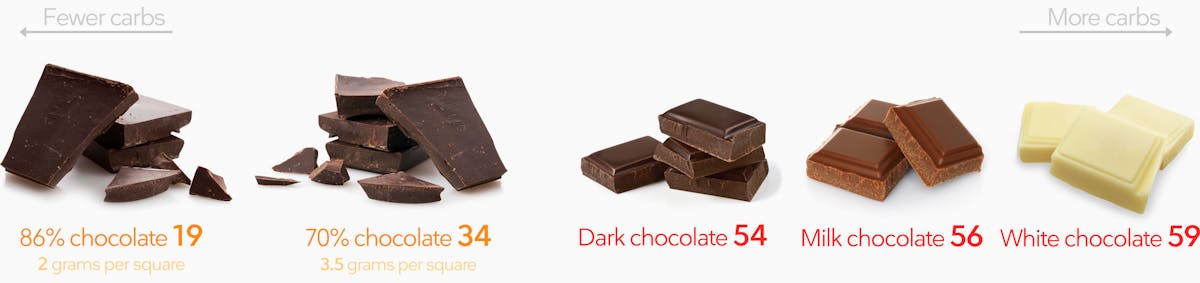
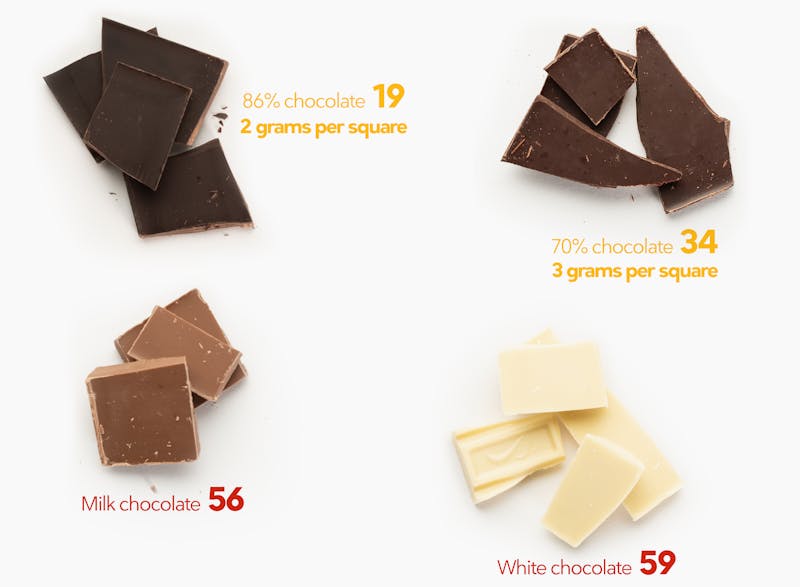
- One small thin square (10 grams or less than half an ounce) of 86 percent chocolate contains about 2 grams of carbs.
- Switch to 70% chocolate and you get about 3.5 grams per square.
- Regular chocolate can be 6 grams of carbs or more per square – not an option if you want to stay low carb.
More options
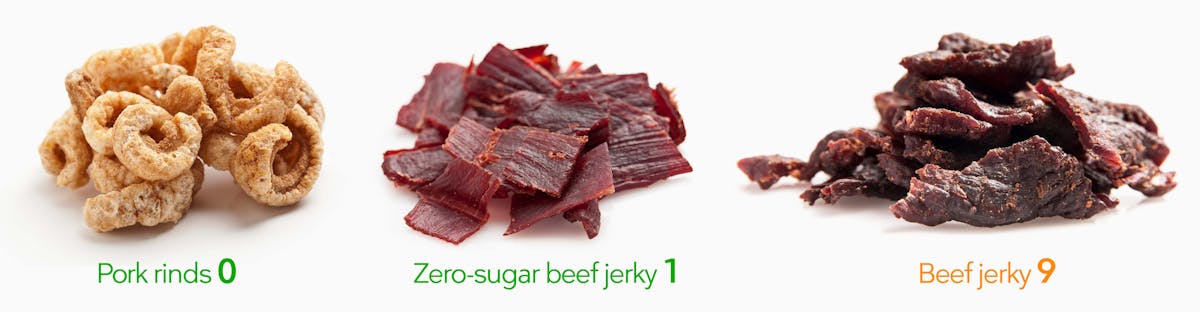
Beef jerky: Note that almost all available commercial options have added sugar, which is why a normal carb count is 9 grams per 100 grams (3½ ounces). We recommend you look for brands with no added sugar, or make your own.
Chips recipes


Common mistakes on low carb
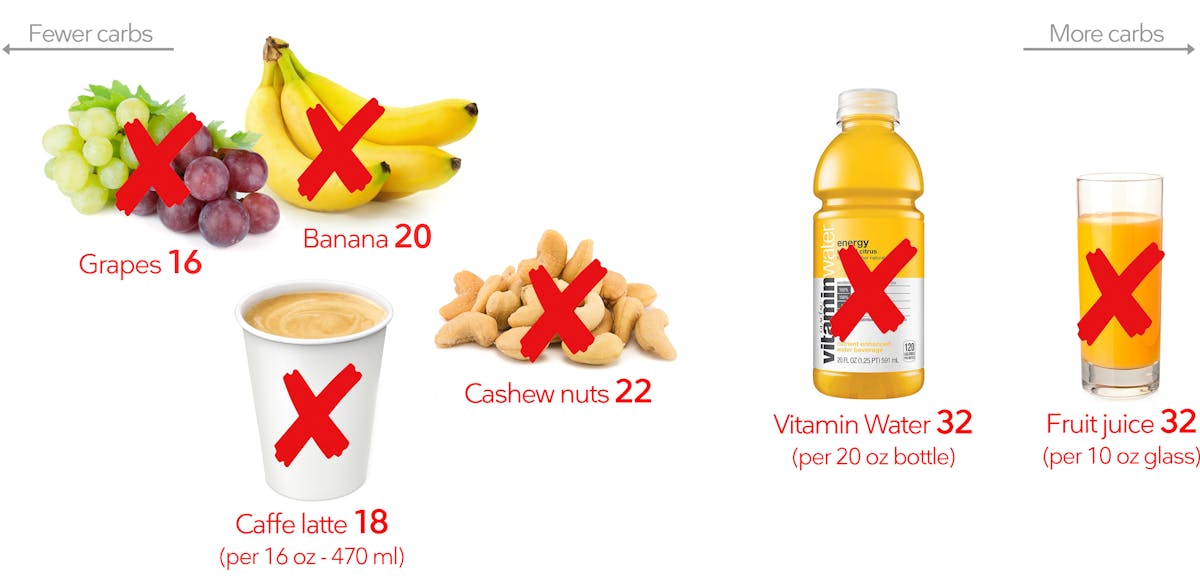
Sweet things – caution recommended
While the sweet recipes below are low carb, they are also very rewarding and tempting.7 They may encourage eating when not hungry, and that can slow your weight loss. So be a bit careful.
However, these low carb recipes are still likely better for your weight and health than high-carb versions of similar recipes.8


Low carb snacks — the best and the worst - the evidence
This guide is written by Dr. Andreas Eenfeldt, MD and was last updated on July 25, 2026. It was medically reviewed by Dr. Bret Scher, MD on June 27, 2022.
The guide contains scientific references. You can find these in the notes throughout the text, and click the links to read the peer-reviewed scientific papers. When appropriate we include a grading of the strength of the evidence, with a link to our policy on this. Our evidence-based guides are updated at least once per year to reflect and reference the latest science on the topic.
All our evidence-based health guides are written or reviewed by medical doctors who are experts on the topic. To stay unbiased we show no ads, sell no physical products, and take no money from the industry. We're fully funded by the people, via an optional membership. Most information at Diet Doctor is free forever.
Read more about our policies and work with evidence-based guides, nutritional controversies, our editorial team, and our medical review board.
Should you find any inaccuracy in this guide, please email andreas@dietdoctor.com.
Frequent snacking may not be a good idea, especially if you want to lose weight:
Diabetologia 2014: Eating two larger meals a day (breakfast and lunch) is more effective than six smaller meals in a reduced-energy regimen for patients with type 2 diabetes: a randomised crossover study [moderate evidence] ↩
Keeping carbs low can help reduce appetite:
Obesity Reviews 2014: Do ketogenic diets really suppress appetite? A systematic review and meta-analysis [strong evidence] ↩
Fiber isn’t counted because unlike the digestible portion of carbs, your body can’t absorb it:
Nutrients 2010: Effects of dietary fiber and its components on metabolic health [overview article; ungraded]
↩Eggs are an excellent source of protein. Although they’re high in cholesterol, eggs don’t seem to raise cholesterol levels much in most people, and they may even reduce some heart disease risk factors:
The American Journal of Clinical Nutrition 2018: Effect of a high-egg diet on cardiometabolic risk factors in people with type 2 diabetes: the Diabetes and Egg (DIABEGG) Study—randomized weight-loss and follow-up phase [randomized trial; moderate evidence]
Nutrients 2017: Consuming two eggs per day, as compared to an oatmeal breakfast, decreases plasma ghrelin while maintaining the LDL/HDL ratio [moderate evidence]
Current Opinion in Clinical Nutrition and Metabolic Care 2006: Dietary cholesterol provided by eggs and plasma lipoproteins in healthy populations [overview article; ungraded]
↩Although it’s still somewhat controversial, several recent systematic reviews of randomized trials and large observational studies have failed to show a connection between eating saturated fat and increased heart disease risk:
Open Heart 2016: Evidence from randomised controlled trials does not support current dietary fat guidelines: a systematic review and meta-analysis [strong evidence]
Nutrition Journal 2017: The effect of replacing saturated fat with mostly n-6 polyunsaturated fat on coronary heart disease: a meta-analyses of randomised controlled trials [strong evidence]
Learn more: A user guide to saturated fat
↩Maltitol, by far the most common sugar alcohol in low carb products, has a high glycemic and insulin index, and a large portion is absorbed into the bloodstream:
Nutrition Research Reviews 2003: Health potential of polls as sugar replacers, with an emphasis on low glycemic properties [overview article; ungraded]
European Journal of Clinical Nutrition 1994: Digestion and absorption of sorbitol, maltitol and isomalt from the small bowel: a study in ileostomy subjects [randomized trial; moderate evidence]
Gastroentérologie Clinique et Biologique 1991: Clinical tolerance, intestinal absorption, and energy value of four sugar alcohols taken on an empty stomach [randomized trial; moderate evidence] ↩
Research suggests that artificial sweeteners partially activate the “food reward” pathway responsible for cravings:
The Yale Journal of Biology and Medicine 2010: Gain weight by “going diet?” Artificial sweeteners and the neurobiology of sugar cravings [overview article; ungraded]
Physiology & Behavior 2016: Recent studies of the effects of sugars on brain systems involved in energy balance and reward: relevance to low calorie sweeteners [overview article; ungraded]
↩This is based on clinical experience of low carb practitioners and was unanimously agreed upon by our low carb expert panel. You can learn more about our panel here [weak evidence]. ↩