When Carolina Cartier discovered she was pregnant with twins this past March, she never questioned whether she would continue eating a ketogenic diet . The 31-year-old Seattle area woman had been plagued by metabolic issues literally all her life: precocious puberty; polycystic ovarian syndrome (PCOS ) by age 14; weight gain to 320 lbs (145 kg) on her 6 foot (183 cm) frame and pre-diabetes by her 20s.
Her PCOS caused her ovaries to be enlarged and covered in cysts. She was told she was infertile and would likely never be able to have children.
In August 2014, aged 28, her health was so poor that she went on medical disability from her job as a financial analyst. That first month off, however, she discovered and adopted the ketogenic diet.
While she lost two early pregnancies at the start of 2016, she knew she was getting healthier every day. Her positive pregnancy test in March 2017 was a happy surprise, as was the news soon after that she was carrying healthy twins.
Except for a bout of extreme nausea and sea sickness for a week on a low-carb cruise early in this pregnancy, she has adhered to the ketogenic diet now through 20 weeks of pregnancy and counting. She plans to continue this way of eating for the rest of her life. She feels great and looks wonderful; the twins in utero are thriving. “My life is transformed. Why would I even consider abandoning this way of eating when all of my positive health changes, and my pregnancy, I owe to this diet?”
Disclaimer
There is little to no published research on the use of ketogenic or very low-carb diets in pregnant humans.
There are, however, rodent studies that may or may not be applicable to humans.
In this guide, we describe the extensive experience of expert physicians and other practitioners who have been recommending ketogenic diets to their pregnant patients for years. We also highlight a couple of individual success stories.
Diet Doctor is not stating that ketogenic diets have been scientifically proven to be safe in pregnancy. Unfortunately, it will be difficult — if not impossible — to obtain an adequate level of scientific evidence, given the ethical issue of performing these types of studies in pregnant women.
If you eat or plan to start a low-carb or keto diet while pregnant we recommend working with a physician experienced in the use of low-carb nutrition in pregnancy.
The controversy of keto pregnancies
Perhaps no issue in low-carb ketogenic eating is as heated and as controversial as the ketogenic diet during pregnancy. Ketones in the urine of pregnant women scare many good doctors into fearing the life-threatening conditions of diabetic ketoacidosis in pregnancy or starvation ketosis. The number of primary care and ob/gyn physicians who understand and are comfortable with nutritional ketosis in pregnancy, while growing, is still exceedingly small.
Since few studies, of any sort, enroll pregnant women because of liability, ethical concerns, and the physiologic complexity of pregnancy, evidence-based medicine about what is best for pregnant moms is severely lacking.
It is known, however, from an increasing number of long-term observational studies, that the unique physiologic conditions and complications of pregnancy predict future disease risk for both mothers and their offspring. We know, therefore, that fostering a healthy pregnancy is paramount for mom and baby. But what is the optimal diet for each individual woman and her unborn child?
Into this research vacuum, many doctors default to the oft recommended advice: “Eat low fat with plenty of fruit, vegetables and healthy grains.” Some even become apoplectic if a pregnant mom says she is eating low carb or keto. “You are harming your baby! ,” some have been told, with doctors often citing research — in mice — that a ketogenic diet exposure in utero led to both increases and decreases in the rate of organ development, as well as some neurobehavioral changes as young adult mice.
While we should not dismiss the findings of this research, we must also recognize its limitations. Some of the findings could have been due to the insufficient protein content of the ketogenic diet used in the mouse studies, as opposed to being due to fetal exposure to higher ketone levels. The high-fat chow may have used highly-processed fats that aren’t similar to what a human would consume as part of a well-formulated ketogenic diet. Human fetal development differs from mouse fetal development in a myriad of ways. The list of caveats could go on and on.
One review article about the “contraindications” to a ketogenic diet lists pregnancy as a definite contraindication. As justification, the authors cite the only published case series, which described two pregnant women with epilepsy using a ketogenic diet to control their seizures. One of the women had a baby with no developmental issues out to 12 months of age. The other gave birth to a child with bilateral ear deformities, but we cannot know if this was caused by the diet, the thrice-escalated doses of her anti-seizure drug, or something else.
So what is a health-conscious, responsible, expectant mom to do?
One fact on which we can all can agree is that pregnant women — or those trying to conceive — should take prenatal vitamins to ensure adequate daily intake of iron, folate, and essential vitamins and minerals for fetal development. Recently, the importance of choline to the neural and metabolic health of the developing fetus has also become increasingly recognized. Choline is found in high amounts in beef, eggs, chicken, fish, and pork, while lower amounts are found in cruciferous vegetables and pulses, such as lentils, chickpeas, and other dried beans.
As for a low-carb or ketogenic diet, there are no rigorous scientific studies in humans available, and none are expected as explained earlier in this article. Given that we don’t have any strong evidence, it may help to hear from a few experts and individuals who are gaining increasing experience with low-carb ketogenic pregnancies.
The case for a ketogenic diet
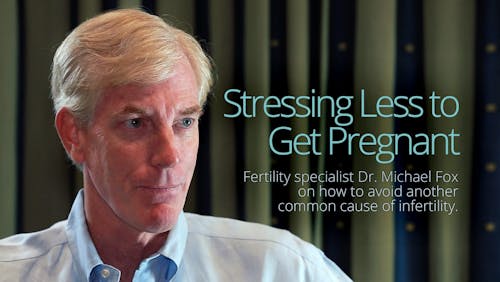
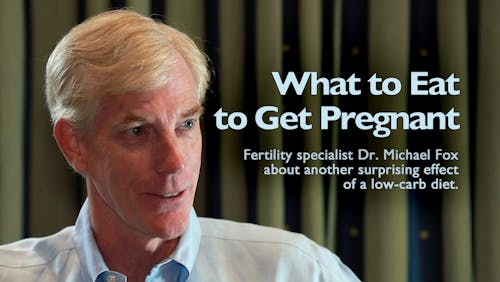
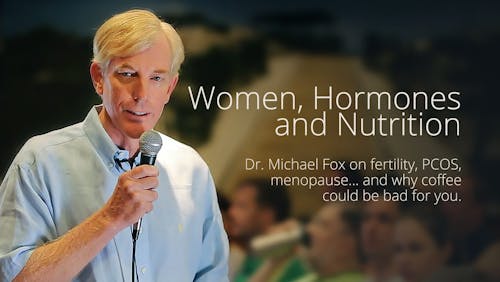
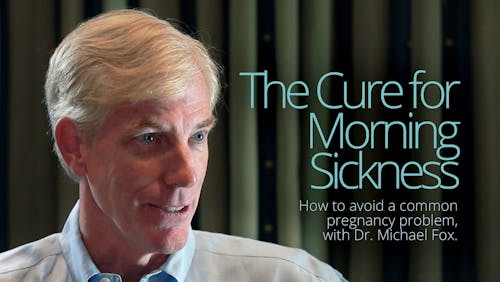
“It is completely safe for women to be eating a ketogenic diet in pregnancy. Women in ancient times were almost certainly ketotic during pregnancy,” says Dr. Michael Fox, fertility specialist at the Jacksonville Center for Reproductive Medicine , who has not only been recommending a low-carb ketogenic diet for 17 years to his infertile patients but also to all his patients who become pregnant. He has now had hundreds of patients “who have been completely ketotic throughout pregnancy without any untoward effects.”
He recommends women start the diet two to three months before trying to conceive so that the mom is fat-adapted before entering pregnancy. He advises that, once pregnant, the mother enjoy frequent low-carb, high-fat eating every two to three hours from the time she wakes up — with no fasting. He provides a dietary handout of meal and snacking foods that lists items such as cream cheese or unsweetened nut butters on vegetables like celery, cucumber or cauliflower; as well as nuts, egg in all forms, meats, canned and fresh fish, cheeses, avocado, unflavored pork rinds, butter, and full-fat cream.
In his experience, eating this way decreases the rates of miscarriage, preeclampsia, gestational diabetes and morning sickness.
In one very dramatic case, Dr. Fox had a patient referred to him who previously had such severe hyperemesis gravidarium — extreme vomiting in pregnancy — that it had led to multiple hospitalizations and six previous pregnancy terminations. On his advice she started the ketogenic diet prior to her seventh conception and she had no nausea during pregnancy and made it all the way to term.
Dr. Robert Kiltz, a fertility specialist at CNY Fertility , with clinics in New York State and Florida, has been recommending the ketogenic diet for improved fertility and pregnancy for the last five years. “I like to say that ‘ketogenic’ means ‘the key to genius’!,” says Dr. Kiltz, who posts inspirational, pithy videos on Facebook in part to support and encourage women to eat low-carb, high-fat foods for conception and pregnancy. “We have zero need for dietary carbohydrates as humans.” Despite now witnessing many successful keto pregnancies, he says he is still in the minority of fertility doctors who recommend this approach.
Ketogenic expert, author, and Diet Doctor contributor Maria Emmerich, who has the popular ketogenic website Mind Body Health , has counseled hundreds of women on ketogenic eating during pregnancy , with great results. “As if this diet of real food would be harmful to the fetus?” she asks rhetorically. She points to evidence that a fetus can naturally be in a state of ketosis.
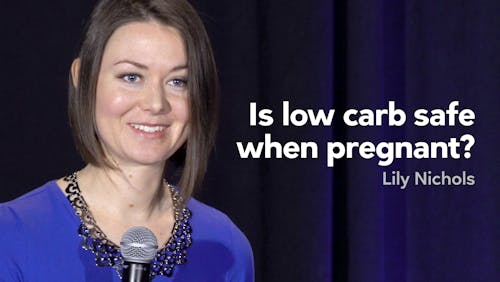
Another expert in low carb or ketogenic diets in pregnancy is US dietitian Lily Nichols , whose popular 2015 book Real Food For Gestational Diabetes has a whole chapter on the misconceptions surrounding ketosis in pregnancy. She has helped hundreds of pregnant women in her career as a specialist in gestational diabetes (GD) , also known as “carbohydrate intolerance of pregnancy.” Along with her book and website , she frequently blogs and appears as an expert guest on low-carb keto podcasts .
“I find it ironic that if you tell your doctor that you plan to eat low carb during pregnancy, they’ll say it is unsafe, but if you say you to plan to eat a diet based on fresh vegetables, meat, fish, eggs, dairy, nuts, seeds and a little fruit, they will tell you to stay the course,” she says.
She also notes, however, that some women, especially during the early days of pregnancy, feel better eating slightly more carbs. If that happens, “don’t beat yourself up, go for it. You have to get through the first trimester anyway you can.” But try, she says, to always opt for nutrient-dense food. “All pregnant women benefit from the most nutrient-dense diet they can manage, and that just happens to be naturally lower in carbohydrates.”
Real keto moms
For some moms like Jill Kingsley, who has experienced two high-carb pregnancies and a third ketogenic pregnancy, the advantage of the latter was exceedingly clear. She decided to switch to a ketogenic diet 16 weeks into her third pregnancy this past year after experiencing extreme nausea. Within 24 hours of switching, her nausea resolved.
“It was obvious, my body runs better on fat and protein. I can’t do carbs,” said the 32-year-old Mesa Arizona mom. Her two previous pregnancies had been wrought with issues: swelling and bloating, high blood pressure, extreme nausea, and infections. She had complete bed rest for her entire second pregnancy because her nausea was so bad she couldn’t stand up.
In her keto pregnancy her blood pressure was normal and her weight gain moderate, she experienced no swelling or bloating, and she felt great. She marvels at the fact that during her keto pregnancy she was going for long walks with no difficulty right up until labor, compared to her second carb-fueled pregnancy in which “I couldn’t even get out of bed.”
She gave birth to 6 lb 9 ounce (3 kg) Justin Tyler Kingsley on July 11 after 3 hours and 2 minutes of labor, from the time her water broke to delivery. “He is my perfect keto baby.”
For Carolina Cartier, it frustrates and even angers her that anyone would suggest, with her health history, that she add carbs back in during pregnancy for her twins to meet a daily carb requirement. “The ketogenic diet was such a simple fix to all my problems. Had anyone ever said ‘Don’t eat sugar or foods that convert to sugar’ I might have avoided two decades of pain.”
Not only is Carolina firmly staying keto through her pregnancy, she has enrolled in a program to retrain as a nutritionist, after her maternity leave. “I want to support and empower other people, particularly pregnant moms, in this diet.” In fact, she is already a frequent commentor helping other would-be moms learn about ketogenic eating in two closed Facebook groups devoted to ketogenic pregnancies.
In some recent advice to other members about what to tell your doctor about how you have chosen to eat for your baby, she counseled: “Don’t say keto. It makes them scared. Say you’re eliminating sugar and processed, starchy foods. No doctor is going to give you a daily sugar requirement.”
—Anne Mullens
Did you enjoy this guide?
We hope so. We want to take this opportunity to mention that Diet Doctor takes no money from ads, industry or product sales. Our revenues come solely from members who want to support our purpose of empowering people everywhere to dramatically improve their health.
Will you consider joining us as a member as we pursue our mission to make low carb simple?
Click here for more info
 , medical review by Dr. Michael Tamber, MD
 Evidence based