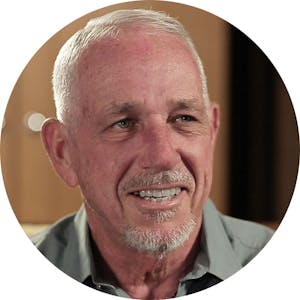
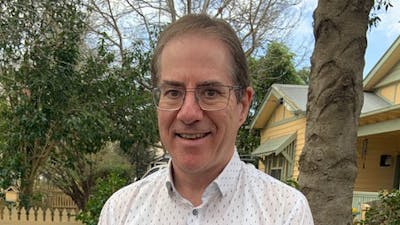
After having a heart attack in 2016, Greg, 59, from Australia, wanted to understand why, and regain his health.
His doctor and cardiologist told him that the best he could hope for was to stop the progression of his heart disease, but in 15 months on an animal-based keto diet his Coronary Artery Calcium Score (CACS), a measure of heart disease, had been reduced by 40%.
He’s also lost approximately 33 pounds (15 kilos), and dramatically improved his metabolic health.
In this interview, which has been lightly edited for length and clarity, Greg shares his experience with keto.
In Feb. 2016, I had a heart attack followed by angioplasty and stenting (medical procedures that help restore the blood flow in the blood vessels). I was a little bit overweight, and so, my doctor encouraged me to follow a low-fat, reduced-calorie diet to lose weight.
After several unsuccessful attempts to lose weight, my daughter suggested I try a ketogenic diet. I didn’t know much about keto, but found some good information on YouTube from a Low Carb Down Under conference that had been recently held in Australia. I listened to speakers like Gary and Belinda Fettke, and Dr. Paul Mason. And at last, my health issues all started to make sense!
Other than heart disease, I was about 35-45 pounds (15-20 kilos) overweight. I took medications for high blood pressure and high cholesterol.
Before starting a low-carb lifestyle, I was eating what I thought was a reasonably healthy diet. My diet included lots of carbohydrates like bread, rice, pasta, and whole-grain cereal. I also ate quite a lot of fruit and some vegetables, meat, and dairy.
I’ve also lost approximately 33 pounds (15 kilos), and dramatically improved my metabolic health.
My HDL has increased by 73%, my triglyceride levels have decreased by 50%, my LDL/HDL ratio has decreased by 24%, and my inflammation is way down (with an hs-CRP at 0.3 mg/L).
I feel much better, have more energy, and my sleep has improved!
For most of 2018, my keto diet evolved as I found low-carb foods I liked. By the end of 2018, my diet had become what I refer to as a very-low-carb-keto-carnivore diet.
These days, I generally fast for about 16-18 hours per day with an eating window of 6-8 hours.
I start the day with about 1 quart (1 liter) of water and a milk coffee with 1/2 cup (or 150 ml) of milk, plus some cod liver oil tablets.
About two hours after my coffee, I eat a larger meal that consists of some combination of bacon, eggs, steak, chops, sausage, pork, chicken, fish, and cheese. I cook it with olive oil, butter, or ghee, and I eat until satiated.
A few hours afterward, I have a small serving of some combination of cheese, avocado, dark chocolate, frozen berries, milk, nuts, and leftovers from my main meal.
I don’t eat any vegetable oils, bread, cereals, rice, pasta, fruit, or vegetables.
I’m not sure I would say I’ve made mistakes, but I have learned a few things along the way:
I do exercise somewhat regularly, and play tennis two or three times a week. However, the amount of exercise I do is roughly the same as before I started low-carb eating. So no, I don’t think exercise is necessary for success on low carb, but I do think at least moderate regular exercise is beneficial for overall health.
Congrats on your progress, Greg. Your story shows how “low-carb” does not mean just one thing, but instead it can take on many different variations. I am glad to see you found one that worked well for your lifestyle. It also sounds like you found physician mentors to help you along your path which is important. Keep up the good work! / Dr. Bret Scher
Want to share YOUR success story with Diet Doctor? Visit our success story submissions page to get started.
Keto for beginners
Cholesterol and low-carb diets
How to lose weight
 , medical review by Dr. Bret Scher, MD
 in Cholesterol, Heart disease, High blood pressure, Success story